
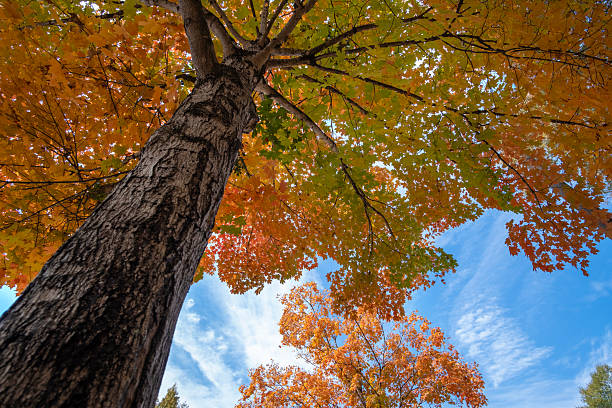
* A visual journey through seasonal reflection and personal renewal *
Just as trees respond to autumn by releasing their leaves and preparing for another season of growth, perhaps we too can find something meaningful in the changing seasons. They offer us an opportunity to slow down, recognize what we have been carrying, and consider what we might be ready to release to make room for renewed energy and personal growth.
So, for a little while, I invite you to step away from the busyness of everyday life and accept nature’s invitation.
Perhaps begin by setting your phone down, completely detached from your body. Along with it, see if you can set aside your worries, fears, responsibilities, and to-do lists. Find a comfortable place where you can simply observe the trees around you. There is nothing you need to accomplish, nowhere you need to go, and nothing you need to figure out.
Perhaps the trees around you are displaying brilliant autumn colors. Some may still be green, others just beginning to change, while a few have already released most of their leaves. Take a comfortable breath and allow your eyes to wander. Notice the colors, the shapes, the textures, and the beautiful variations from one tree to another.
It is interesting how easily nature can draw our attention without asking anything of us. Your eyes might settle on a golden leaf, wander toward a cluster of red leaves, or follow the sunlight filtering through the branches. There is no need to concentrate or search for anything in particular. Just allow yourself to enjoy what is already there.
This gentle attraction of attention, sometimes called soft fascination, is one of the ways nature can offer a welcome respite from the demands of everyday life.
The wisdom of the falling leaves
As you continue looking at the trees, consider what is actually happening during this beautiful seasonal transition.
When autumn arrives, deciduous trees begin a remarkable process of adaptation. As daylight decreases and temperatures change, they gradually retrieve valuable nutrients from their leaves before allowing them to fall. What might appear to be a simple act of losing leaves is actually a carefully regulated process of conserving resources and preparing for the winter ahead.
The tree knows, in its own biological way, that it cannot carry everything forward. Some things must be released to preserve what is most valuable and make room for another season of growth.
I wonder if there is a little wisdom in that for us as well.
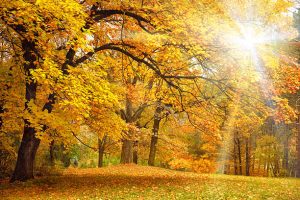
Throughout our lives, we accumulate so much: responsibilities, expectations, disappointments, worries, and emotional burdens. Some are important and deserve our attention. Others may have served a purpose at one time but no longer contribute to our well-being. And sometimes we carry things for so long that we forget we have the opportunity to look at them differently.
As you watch the leaves changing and falling, perhaps consider quietly asking yourself:
What might I be carrying that I no longer need to carry in quite the same way?
It might be the expectation that everything must be perfect, an unresolved frustration, the pressure to accomplish more, or simply the exhaustion of feeling responsible for so many things.
There is no need to find an answer or resolve anything right now. Perhaps it is enough just to recognize that not everything deserves to occupy the same space in our lives forever.
Like the trees, we can sometimes preserve our energy and well-being by learning what we are ready to let go.
Finding beauty in the transition
One of the things I find most beautiful about autumn is that it doesn’t happen all at once. A tree doesn’t suddenly change from summer green to winter bare. The transformation unfolds gradually, with different leaves and branches responding in their own time.
Our lives often follow much the same pattern.
Sometimes we recognize that something needs to change before we understand what comes next. Sometimes we are still holding on to familiar habits while quietly developing new ones. And sometimes we find ourselves somewhere between what was and what will be, not quite certain of our direction.
Perhaps that is simply part of being human.
Looking at the different stages of color within the trees, we might remind ourselves that there is no single timetable for personal growth. We don’t have to have everything figured out, nor do we need to be exactly where we hoped to be.
There can be beauty and value in the transition itself.
Perhaps change isn’t always about losing what was, but about making room for what is yet to come.
Allowing nature to capture your attention
As your eyes continue to wander, you may begin to notice just how much visual richness exists within a single tree.
A sunlit leaf may appear almost translucent, while another tucked beneath it displays a deeper shade of green. Some leaves reveal delicate transitions from yellow to orange and red. Branches, shadows, and openings in the canopy create an endless variety of shapes and patterns.
And yet, none of this requires your attention in the way that everyday activities so often do.
Think about how frequently our eyes are occupied with screens, reading, processing information, making decisions, and responding to one demand after another. Much of our visual experience is tied to something we need to accomplish.
Nature offers something wonderfully different. It provides an abundance of color, movement, texture, and detail, yet asks nothing in return. We can simply look, notice, and enjoy.
Perhaps this is one of the reasons that even a few quiet moments spent observing a tree can feel so refreshing. We don’t always need to hike, exercise, explore, or pursue an activity outdoors to appreciate what nature offers. Sometimes the simple experience of allowing our attention to wander is enough to give ourselves a welcome change of pace.
The tree doesn’t ask for your attention. It simply invites it.
Carrying the experience with you
Perhaps this is something we can begin to incorporate into our everyday lives.
Before setting out on a gentle walk, for example, we might take a few moments to pause and observe the natural surroundings. Rather than immediately carrying the day’s thoughts and responsibilities into our walk, we can allow ourselves a little time to settle into a different awareness.
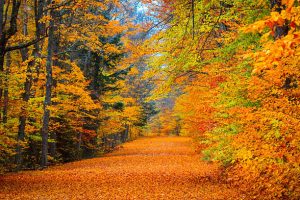
The walk then becomes more than physical movement. It becomes an extension of the quiet experience that began with simply looking at a tree.
And perhaps we discover that we don’t always have to do more to feel better. Sometimes we simply need to slow down enough to notice what is already around us.
A final thought
As the seasons change, the trees remind us that growth doesn’t always mean holding on. Sometimes it means conserving our energy, releasing what no longer serves us, and allowing life to unfold in its own time.
We don’t have to hold on to everything to continue growing. Sometimes, letting go is precisely what allows us to flourish.
May you find moments of peace in the natural world, a little more room to breathe, and a renewed appreciation for the season of life you are experiencing.